

Table of Contents
What Is Functional Fitness?
In today’s era, you hear everyone using fitness jargon to make them seem like they know everything. Lately, I hear a lot of people claiming to be doing “functional training” or improving their functional fitness.
However, many don’t know what functional fitness really is.
Many think functional fitness is doing exercises that replicate real-world movements. Think about how a squat and sitting on the toilet are similar movements.
Meanwhile, others say functional exercises are ones that train all the planes of motion. And you’ll hear many other made-up definitions of functional training.
Well, here’s the scoop on what functional fitness really means:
Exercises that make your body more functional in day-to-day life.
-Myself
It’s that simple.
But now you’re probably wondering: “Well Jacob, isn’t that every exercise?”
And the answer to that is yes! The truth is all workouts are functional workouts. Any time you exercise there will be some carryover into real life.
So, today I’ll give you the rundown on how to build the most functional and fit body with in-home training.
The Recipe For a Functional Body
There are many aspects of functional fitness, which means you’ll need to train in a variety of ways. By training in every area, you can be ready for any challenge life throws your way. In order to build the most functional body aim to improve these 5 areas of your fitness:
Strength
Strength is the most basic aspect of fitness. If you lack strength you most likely lack in many of the other areas. This leads to making most of life difficult. Getting up the stairs, playing with your kids, and other daily tasks become monumental obstacles. In fact, strength is one of the known predictors of one’s longevity.
It’s an important aspect to consider with in-home personal training because you aren’t going to have access to the same weights you would when going to a gym. So, when training at home you’re going to get creative in the ways you’ll build strength.
For my own clients, I recommend getting a backpack and filling it up with bags full of rice, college textbooks, or sand. You can usually get up to 40-50 lbs into the backpack. Or, you could simply buy dumbbells and barbells for home use.
The most important part of strength training is being able to up the difficulty. That could mean a variety of things:
- Improving your form will increase the effectiveness of your strength training.
- Obviously, moving more weight or reps will increase your strength.
- Adding a dead pause at the bottom of an exercise can be another way to improve strength.
- Also, another way you can build strength is to go onto 1 arm or leg when you do exercises. Let’s say pushups are too easy for you, well then try pushups on 1 arm and you’ll find it extremely difficult. By going onto one arm or leg you can double the weight on your working limb. This will make it possible for you to gain strength without ever getting into a gym.
Stability
Stability is a word that not many gym goers know what it means. It’s defined as the ability of a joint to resist movement and hold good position. Another way to think of it is like think of carrying a bucket of water over your head in the palm of your hand. Your shoulder, wrist, and elbow have to stabilize against the moving water so that it doesn’t go pouring on your head.
Stability is a crucial component of functional fitness because you want to have strong joints. Ways you can train your stability is to do exercises that target smaller muscles called stabilizers. These are musles that do exactly what they sound like: stabilize your joint. Your rotator cuff is a group of stabilizers that keep your shoulder stable.
Pick exercises that train one arm or leg, because the load will be uneven your stabilizers will work harder. To improve your functional fitness, aim for higher repetitions of 15-20 to strengthen these muscles.
Mobility
Mobility is another fancy fitness word for flexibility. The reason mobility is important, when it comes to functional fitness, is because life is going to put you in weird positions. Have you ever fallen and caught yourself in a weird position? Well, if you aren’t flexible enough to get into those positions then they can lead to injury. Think of a fun game like twister. What will happen when you try to bend your body in a way you know it can’t?
Functional fitness is all about being able to endure all the weird curveballs life will throw at you. In order to do that you must be strong, mobile, and stable.
Power
Power training could also be called explosive training. It differs from traditional regular exercise because of it’s explosive component. Let’s use an easy example. Take a squat, that is a regular strength training exercise, but a jump is an explosive expression of that. Most power exercises don’t have an eccentric (resistance on the way down) like their strength training counterpart.
When it comes to in-home personal training we use explosive training often. After someone is used to the regular form of the exercise, we’ll add in power exercises. When doing these explosive movements you need to train them very low reps. If you are jumping as high as possible, you’ll likely only have 5-6 good reps. Afterwards, the reps become less useful. If you do too many repetitions these exercises turn into forms of cardio. You don’t want to do 10-20 reps of box jumps because that will not train your athleticism.
In life you’ll definitely be put in circumstances where you need to jump, sprint, and move athletically. By training your power and explosiveness you can improve your functional fitness, so that you can be ready
Cardio
No matter how much muscle and mobility you have, you can’t neglect cardio. Cardio is an essential part of functional fitness. Many of the tasks we do daily are going to require us to have good cardio. Think of activities you do that require movement for a long period of time. You could be shoveling snow or cleaning the house.
Nothing feels worse than going out to do a task like those and having to take several breaks to get it done. You can train your cardio in a variety of ways. That’s one of the aspects I like the most about it. Because most people think that you have to go for a run or ride the bike, but you can actually train cardio with weights as well!
Here are my suggestions for training cardio whether it be through machines or weight training:
- Cardio Machines – When doing your cardio on machines such as the bike or treadmill; I recommend finding the right level for your cardio-ability. Here’s how you do that: find a level/speed that you are sweating and being challenged, but you could still hold a conversation. You should be able to get out more than 3-5 words at a time. This is called the talk test.
Once you’ve found the right level, aim to complete 30 minutes for 3 sessions a week. Over time you will be able to increase the intensity as your cardio becomes stronger!
- Weight Training For Cardio – In order to train your cardio with weights it’s pretty simple. Choose 3-5 exercises that train different muscle groups and do repetitions in intervals. To improve your cardio do this workout 2-3x/week. For the intervals of work and rest I recommend starting with a 20/40 split. Meaning 20 seconds of work and 40 seconds of rest. Over time you can build your cardio up to more challenging intervals such as 30/30. Here’s what an example weight training workout to improve your cardio would look like:
- Dumbbell row
- Rest
- Dumbbell Clean
- Rest
- Dumbbell Front Squat
- Rest
- Dumbbell Overhead Press
- Rest -> Repeat 2 more times
It’s All About Balance, Baby!
What is going to give you the most functional body, and longest life, then it’s important you train in each area of fitness. You’ll want to be well-rounded in strength, stability, mobility, power, and cardio so that you can be prepared for any challenges life throws your way.
The Role of Functional Fitness in In-Home Personal Training
The best part of in-home personal training is that it incorporates your home environment, where you do most of your life activities.
Functional Exercises for In-Home Workout
To create the most effective plan to improve your functional fitness be sure to incorporate the 7 primal movement patterns. These are 7 movement patterns that almost every exercise falls under, and are the types of movements we do in our everyday life. The 7 patterns are squat, deadlift, core, carry, core, push, and pull.
Squat

If you get in and out of chairs daily, then it’s easy to understand the importance of squats. Whether we’re sitting on the toilet, or getting off the couch, squats are essential to daily life. Squats are one of the most basic functional exercises. We do it every day.
Since squats are done so frequently, it’s important that you train them with weight. Getting out of a chair should be an easy task, so keep it that way.
To perform a squat find a stance width that feels comfortable, drop your butt down to the floor, and make sure you keep the weight even on your toes and heels. You want to control the descent the whole way. Count 3 seconds down, 1 second up, for every repetition. Squats seem to do best when performed in the 6-20 repetition range.
Deadlift
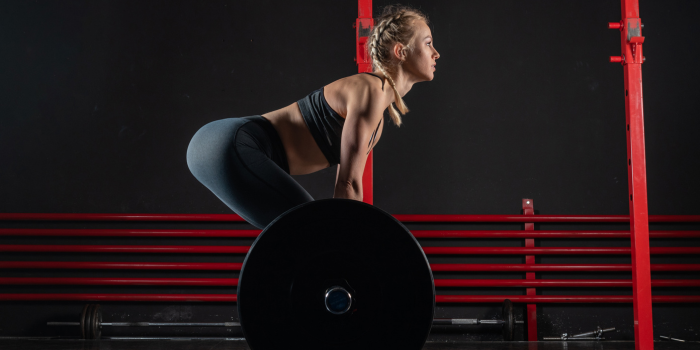
How many of you have always been told: “Lift with your legs!”? We’re always told to do that, but nobody ever explains how. That’s where deadlifts come in.
Deadlifts are a functional exercise because it teaches you how to pick up things using your whole body, not just your back. This is so important because it prevents back injury. As you age knowing how to deadlift becomes even more important. So, if you don’t want the back of a 90-year-old electrician do this:
Begin by holding a weight in each hand, maintaining an upright chest. Gradually lean forward while pushing your hips back and up, as if aiming for the ceiling. Ensure your weight is evenly distributed between your toes and heels for proper balance. When performed correctly, your back will remain straight and you’ll experience a significant stretch in your hamstrings. Then, to complete the deadlift, simply stand upright while holding the weights. This is the essence of “lifting with your legs.”
Core
No set of muscles is worked more in daily activities than your core. Every time you move your core is engaged in some way. A strong core is the foundation of functional fitness. It will help protect your low back from injury and make daily tasks easier.
One big misconception is that core exercises are tons of leg raises or crunches. However, the main job of your core is to resist movement in the body. Think of exercises where you don’t move, like a plank. These exercises work different muscles than the ones performing a crunch.
Carry

Carries, aka farmer’s walks, are exercises that mimic carrying things. A good example of a carry in everyday life would be when you go grocery shopping, and you try to carry all the bags inside. Carries work your core, upper back, and grip strength.
Push
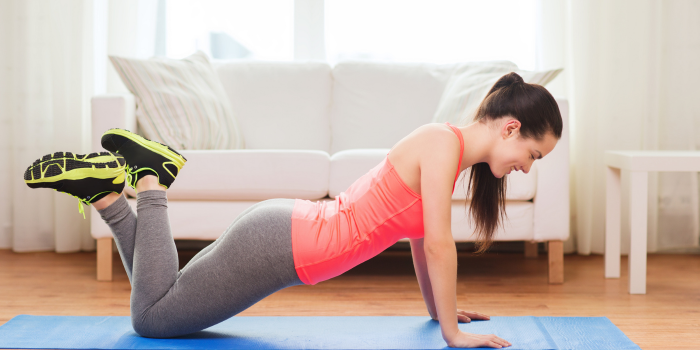
Upper-body pushing exercises have the most carryover into real life. In an upper-body push, you are pushing some type of weight away from your body. A good example would be the bench press. We are always doing work that is in front of or overhead of us. Activities like reaching up into your cupboard, or preparing a meal benefit from training your push muscles.
Because we do so much work in front of ourselves we can become more functional in daily life by working our push muscles. For my in-home personal training clients, I usually recommend doing these exercises anywhere from 3-15 repetitions. It’s also important to note that you don’t want to overtrain these muscles. Because so much of our work is in front of us, these muscles tend to lack flexibility and are overdeveloped. So, do not train these muscles too frequently.
Pull
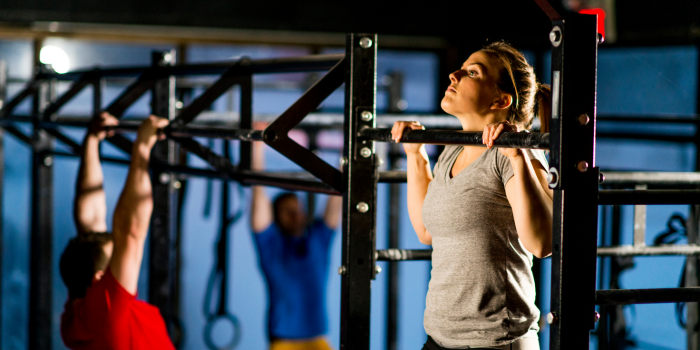
Upper-body pulling exercises are the opposite of upper-body pushing exercises. They involve pulling some weight towards your body, either overhead or in front of you.
Single Arm & Leg Variations
To achieve the most functional body, incorporate unilateral variations of these exercises. Do more exercises such as single-leg squats and single-arm rows.
Incorporating single arm/leg exercises helps address imbalances between your left and right sides. This training method enhances your stability, strength, and mobility, preparing you for real-life situations when you may find yourself in awkward positions, such as during a fall.
Unilateral training is crucial for functional fitness, as it mimics everyday movements. For instance, every step you take while walking requires you to balance on one leg momentarily.
Cardio
Cardio is everyone’s favorite!
Cardio, meaning cardiovascular, is training that works on improving your heart and lungs. For everyday life, it’s important to have good cardio. You never know when you’ll have to go up flights of stairs or run through a car parking lot. Nothing feels worse than doing something, and finding yourself winded by the end. It makes you feel out of shape.
I recommend training your cardio 2-3x a week minimum, for anywhere from 20-45 minutes. Be sure that doing cardio doesn’t have an impact on your weightlifting. So do your cardio on days off, or after you lift.
By doing both cardio and weightlifting you’ll build the perfect, functional body for everyday life.
Tips For Functional Training At Home
Form Is King
The biggest mistake beginners make is focusing too much on how many reps and how much weight to use. You can lift all the weight you want, but at the end of the day if your form isn’t good it doesn’t matter.
To get the most out of your workouts learn what good form is. There are a couple of suggestions I have for you.
Firstly, most exercises you do should have a tempo of 3-0-1-0. Meaning, 3 seconds on the way down, 0 seconds at the bottom, 1 second to push the weight up, and 0 seconds rest at the top. Most people don’t control the weight on the way down, so they’re missing half the rep! You can’t do half the work but expect to get the full results. Slow down your lifting!
Secondly, you can use what’s called the eye test. To perform it record yourself doing a set of whatever exercises. Watch the video and ask yourself: “Did that rep look good or bad?” You don’t have to have all the know-how to know whether or not a rep was good. A perfect repetition will always look good to the naked eye. Similarly, you could have never played golf, but you’ll know a good swing when you see it.
From this point, you can tinker with your form until it looks acceptable to you.
Finally, try to make your exercises relevant to your daily life. If there are tasks you do daily, whether it be lifting stuff or going up the stairs, then do exercises that mimic those activities. If you pick up a lot of things, then deadlift more. Practicing the things you do daily, via weightlifting, is the essence of functional fitness. It keeps you doing those activities for life!
Conclusion

Jacob is an in-home personal trainer serving St. Charles County, MO. He lost 55 lbs through personal training and built Fenix Fitness to help others do the same. He specializes in fat loss, functional fitness, and nutrition coaching.